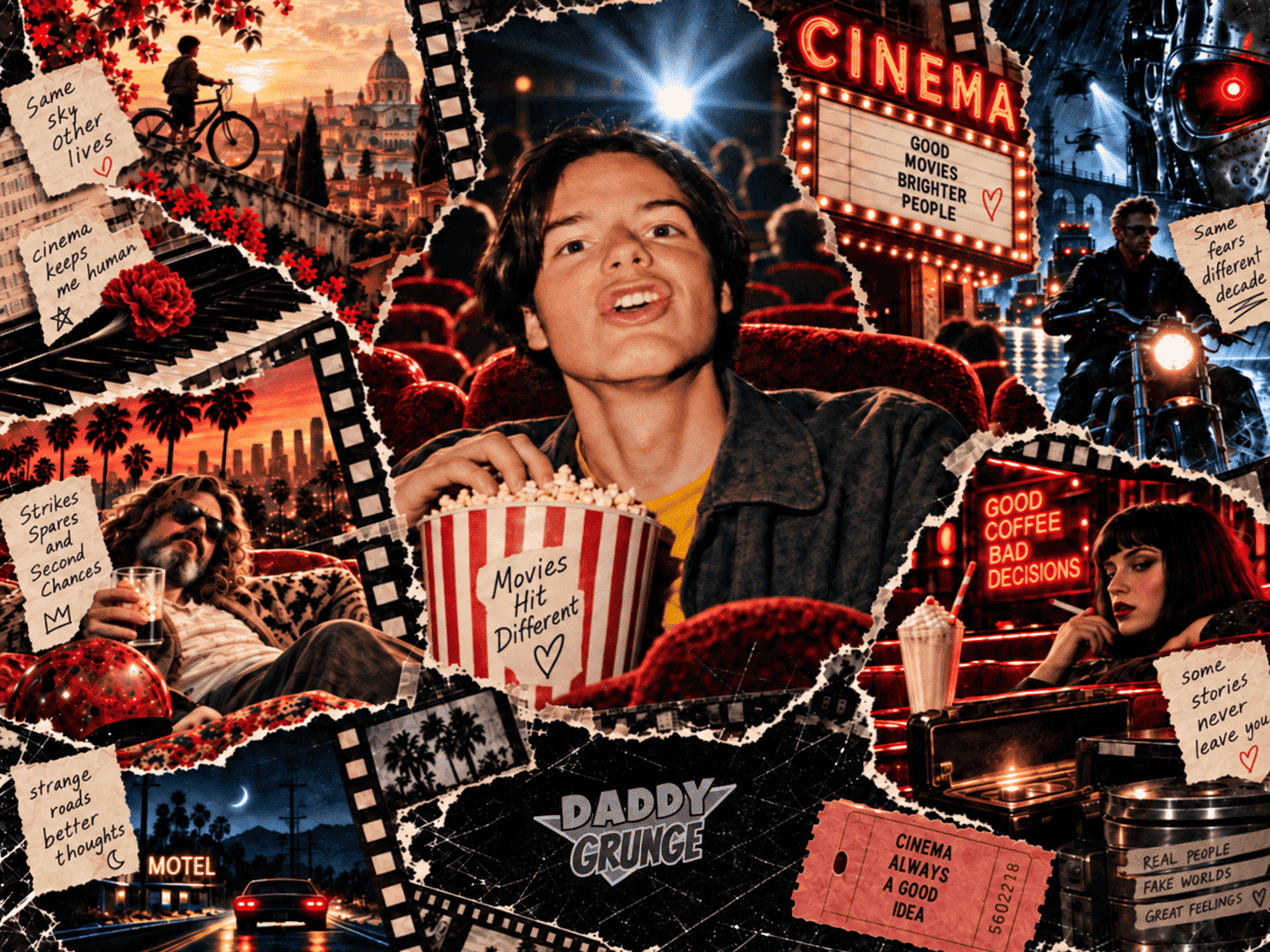
Five movies I’ll probably try to talk my daughters into watching someday.
Any list of great, interesting and memorable movies from the ’90s could go on forever. Classics like Forrest Gump, Good Will Hunting, Dances with Wolves or Home Alone immediately come to mind.
There’ll be blockbuster classics here, but also quieter indie movies. The ’90s were my decade of exploration in pretty much every sense, and going to the movies was still a proper cultural and entertainment event.
Speaking of cinema: yes, back then going to the movies actually felt like a little occasion. With friends, or sometimes even on your own. And because it was a social thing, the movie was usually dissected over a beer afterwards before everybody headed home.
What else were you supposed to do as a teenager in the Ore Mountains?
Clubkino Siegmar, the open-air cinemas at Vox or AJZ, or the Luxor Cinestar — those were the kinds of places a village kid like me ended up going to. Just adding a little local flavour here.
The Game
Rather than coming up with yet another debatable, taste-driven and ultimately pointless ranking, I asked myself a few different questions:
- Which movies still echo in my head today? I’ve watched some of them a few more times over the years, but the strongest memory is usually still that very first viewing. And if a movie has stayed lodged in my brain all this time, it automatically has a decent shot at making the list.
- Why did they stick? This is about scenes, moments and whatever those films meant to me personally.
- How did I find them in the first place? Media hype? Recommendation? My own discovery? Pure accident?
- Would I eventually annoy my daughters into watching them? That’s actually the deciding question. Some things age badly. Others somehow remain timeless. Fight Club, for example, genuinely shocked me when I watched it again after 25 years — mostly because of how naive and almost staged its rebelliousness suddenly felt. Back then? I stood up in the cinema and applauded. The only one. Didn’t care. I was completely blown away.
Out of Sight
So those four questions produced the first five movies I want to put out there. Please forgive me if, say, Titanic isn’t among them. No question: it’s an absolute masterpiece, a cinematic battleship, overwhelming and emotionally flattening when it wants to be.
But for all its status as genuine cultural heritage, it simply hasn’t echoed through my own life in quite the same way.
So here it is: a completely personal list to argue with, roll your eyes at, rediscover, dismiss, remember — whatever works.
First Strike
1. Léolo
The story of a boy going through puberty in a poor Canadian neighbourhood in the 1950s, while fantasising that he is actually Italian.
What is fiction? What is psychosis? What is a fragment of memory?
Hard to tell.
What you do get is a film full of bizarre, rough and sometimes pretty outrageous scenes.
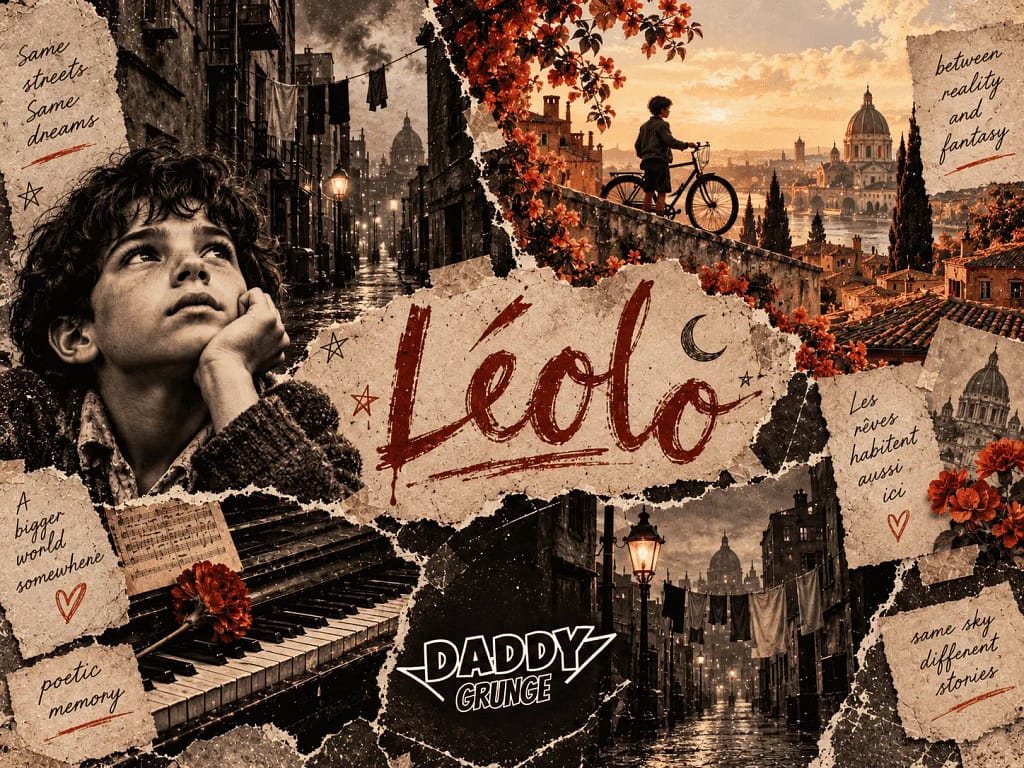
After-effect: When I think about this movie, I think of cinematic poetry. This really is lyricism captured on celluloid. A genuinely unusual piece of art.
How I found it: A recommendation from a good friend who had a huge influence on my cultural education. That alone makes it special to me.
Dad recommendation: Yes — but only once puberty is already well underway. Definitely not one for six-year-olds, and mentally it isn’t exactly light entertainment either.
A bit of trivia: Writer and director Jean-Claude Lauzon died in a plane crash in 1997. The film draws strongly on Réjean Ducharme’s novel L’Avalée des avalés, which also plays a role within the story itself. Experiences and emotions from Lauzon’s own life found their way into the film as well.
Highly metaphorical, wildly creative and packed with layers of meaning.
That’s why, to me, Léolo is basically “poetry in motion (picture)” — cinematic poetry.
2. The Big Lebowski
An ageing hippie gets dragged, through a series of stupid coincidences, into something halfway between a gangster story and a bizarre odyssey through the L.A. art scene.
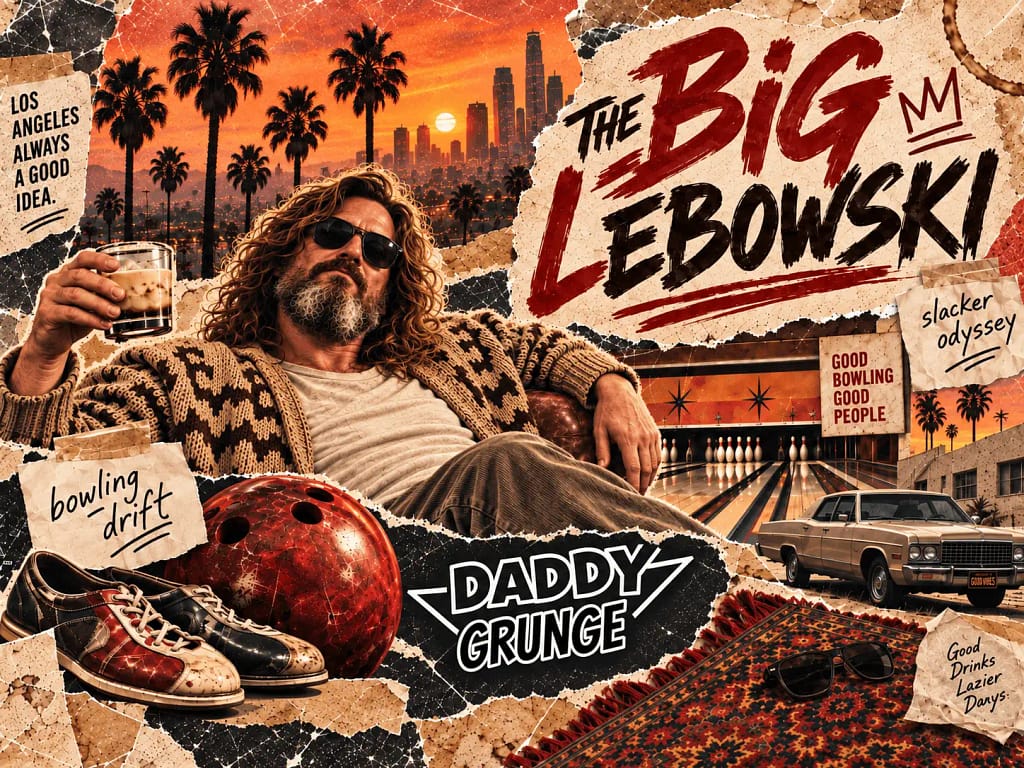
After-effect: Even though I’ve seen the film several more times since, a few things are permanently burned into my brain: “I hate the fucking Eagles,” Donny’s ashes ending up all over the Dude, and the Dude’s entire stoic couldn’t-give-a-shitapproach to life.
And, of course, watching Americans gleefully take the piss out of Germans.
How I found it: A standard cinema trip with a mate. I don’t think either of us really knew what we were walking into — other than the Coen brothers being a pretty reliable sign that it might be good.
It was basically: “Fancy going to the movies?”
We laughed our asses off. That I remember.
Whether the night ended in a pub afterwards? No idea.
Dad recommendation: Definitely. It’s a cult movie.
Whether my daughters will ever understand why the hell any of this is funny? Who knows.
Maybe the charm and flow really are timeless.
3. Terminator 2: Judgment Day
This time, the T-800 is John Connor’s protector, fighting an overwhelmingly superior enemy: the T-1000, a newer and much more dangerous model.
An action-packed thriller full of “speshul ee-fex.”
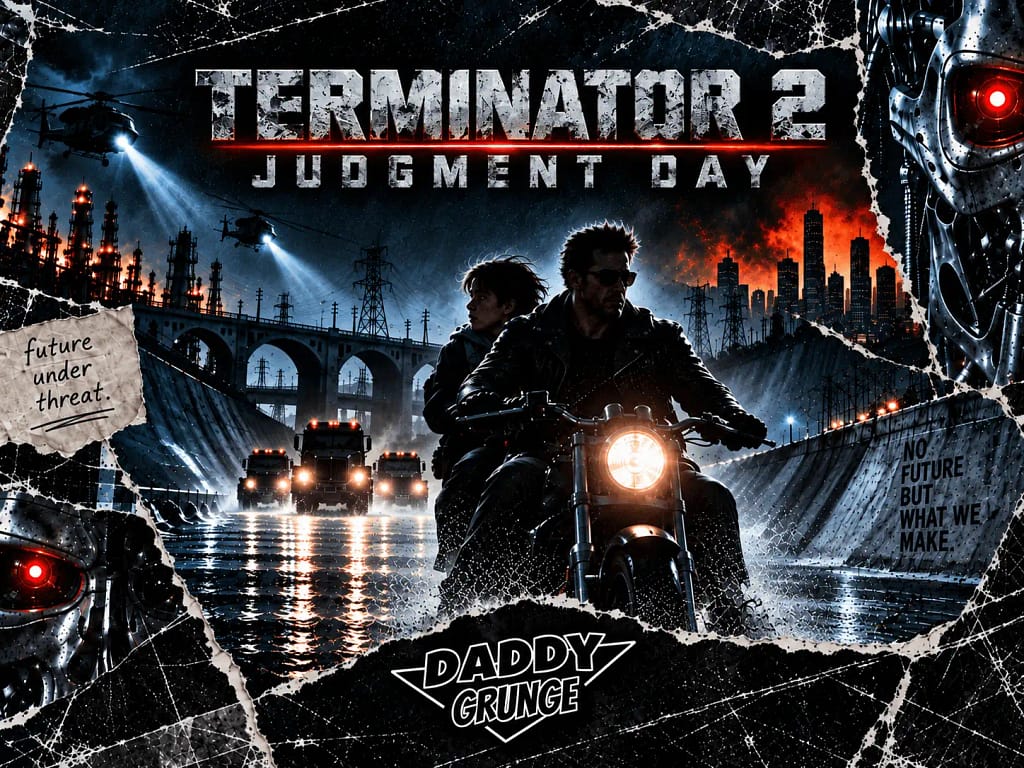
After-effect: Strangely enough, I don’t think I’ve ever sat down and watched the whole thing from start to finish again.
But every time a random scene appeared on TV, I’d immediately stop and soak it up.
How I found it: Media hype, late 1991.
Everybody wanted to see it.
So we went.
In packs.
On mopeds.
I remember the cinema in the neighbouring town being absolutely rammed. Half my class was sitting in there, and clouds of cigarette smoke hung in the room, cutting through the projector beam.
That’s how cinema is supposed to feel.
Great moment. Great movie.
Dad recommendation: Yes. I’d genuinely love to see how my daughters react to it.
Unless, of course, some real-life Skynet has completely ruined the dystopian charm by then and turned half the movie into a documentary.
Then they’ll probably look at me and ask:
You guys saw all this coming and did nothing?
Maybe showing them this one isn’t such a good idea after all.
4. Pulp Fiction
A gangster tale told through interlocking storylines, built around dialogue, music, violence and one hell of a lot of style.
A Tarantino masterpiece.
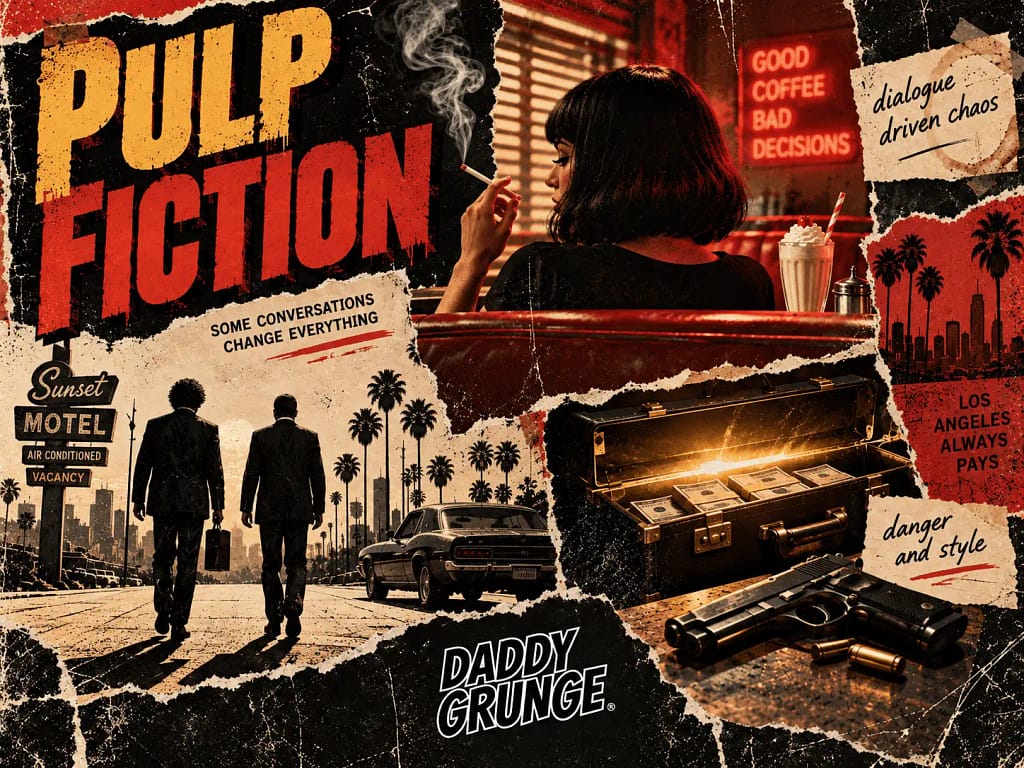
After-effect: More than anything, it’s the soundtrack, the coolness and that completely unique atmosphere that stayed with me.
It’s one of those movies I can still switch on today and immediately fall back into.
How I found it: I definitely noticed all the hype at the time — but I didn’t actually watch the movie until quite a bit later, probably around 1997.
So there’s no legendary cinema story attached to this one. No special night. Nothing dramatic.
I simply caught up with it eventually.
And immediately understood what everybody had been talking about.
Dad recommendation: Yes.
If only because it’s such an important piece of ’90s film and pop culture.
Whether my daughters will ever find it as cool as I do is another question entirely.
5. Lost Highway
So… what’s it about?
Not the easiest question to answer.
You basically have to surrender yourself to Lynch’s sequence of metaphors, changing identities, thriller moments and sudden shocks.
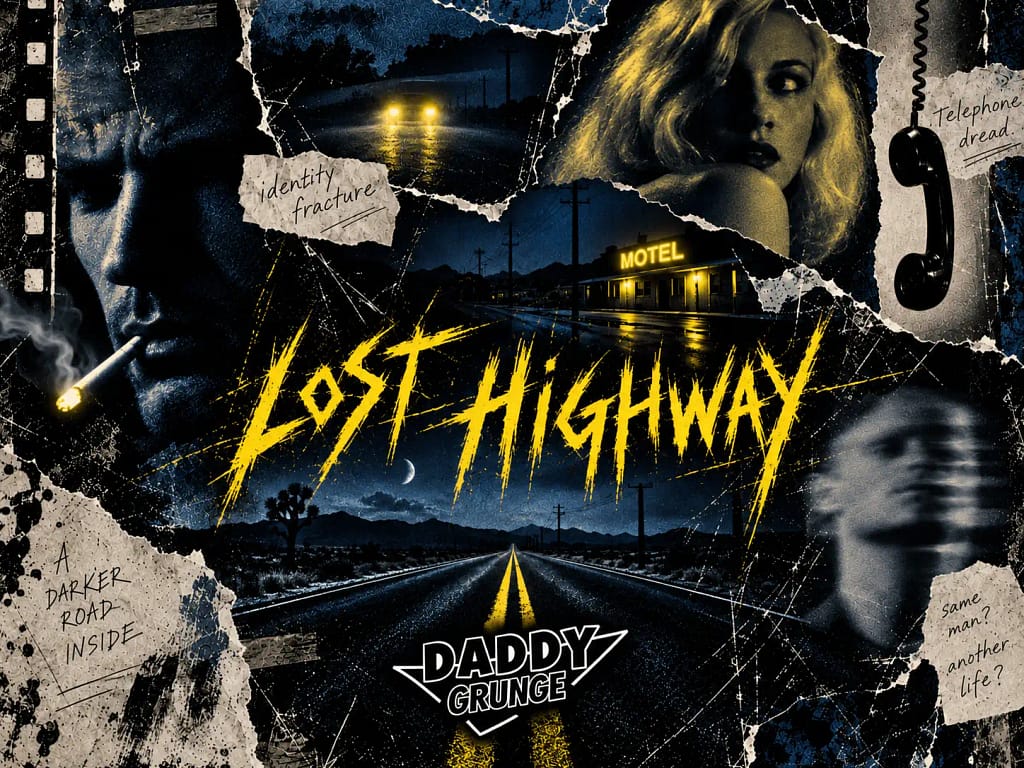
After-effect: “I’m at your house. Call me.”
That still sends a shiver down my spine.
And this one I definitely remember discussing in a pub afterwards. My friend kept imitating the scene until it finally dragged me back out of whatever disturbed state the movie had left me in.
How I found it: Drove to the Luxor with a bunch of friends and simply picked it from the programme.
There were usually a few indie films hiding among all the blockbusters, so you could more or less just show up and take your chances.
We came out mildly traumatised.
Dad recommendation: Maybe this one is more along the lines of:
“Look at the kind of insane shit your dad used to watch.”
Mostly just to impress them a little.
A bit of trivia: Lost Highway became an important door-opener for Rammstein in the US. After Andy’s rather unpleasant encounter with a glass table, “Heirate mich” kicks in.
And that’s exactly how I remember it:
That riff hit the scene like a fucking sledgehammer.
Don’t want to miss more 90s Echoes? Grab the Backstage Pass!
Now it’s your turn: Which ’90s movie still echoes in your head today — and why? Drop it in the comments.