90s Echo dives into the music, culture, style and spirit of the 1990s — from grunge and alternative rock to jungle, big beat, house, techno. More than just nostalgia: it’s about the vibes, the attitude and the contradictions of the decade. This is where memories meet meaning, and where the raw energy of the 90s still echoes into the present.
„Engage!“ – How Sir Patrick Stewart made me half a Trekkie (and a slightly better human being).
Some news makes you stop and think. Last night, I learned Sir Patrick Stewart had died. And this beamed me straight back to the days when Captain Jean-Luc Picard was my ideal of a leader.
My „first contact“ with Star Trek: The Next Generation came in 1990, when German TV began airing the new series in that familiar early-evening slot known for shows like The Fall Guy, Matlock, or Riptide back then. At first, I really disliked what I saw: Strange costumes and masks and stiff dialogue in a strange setting where everything looked much the same. A chamber drama in space whose appeal I didn’t quite grasp. And an android and a Klingon who both seemed solemn and intelligent, despite looking so strange to me.
Things Will Never Be the Same
Four years later, the situation changed: After long school days I desperately tried to waste time until supper. After “Next Generation” switched channels, it ended up in the afternoon lineup. So I gave it another try, and this time it stuck! Once I’d been assimilated into that universe, I listened and watched. And I was struck by the show’s philosophy and Sir Patrick Stewart’s portrayal of Jean-Luc Picard.
Maybe it was a matter of maturity but all of this happened during my teenage years, when I was searching for meaning. And Captain Jean-Luc Picard, he was full of meaning. His considerate decisions, his dignity, his style of interacting with others. A true human being. I was thrilled.
Later, in real life I rarely encountered people who lived up to that example. Especially in leadership positions. To me, that was art: offering a higher ideal of how humans could treat each other, while weaving physics—with which I struggled at school back then—and other nerd stuff into Shakespearean drama. And for a Gen-X kid like me, it offered a glimmer of hope that humanity might evolve into something a little wiser.
Sir Patrick Stewart’s first love was the theatre, especially Shakespeare. Perhaps that was part of what gave his Picard such dignity and presence. I admired the character, and I admired the man who brought him to life. What a loss—yes, for humanity.
Some memories stay with us. In my Daddy Grunge newsletter, I share personal stories about the music, culture and moments of the 90s—and what they mean to us today. You’re welcome to join me backstage.
All the Small Things – how a newborn daughter’s photo made tech history in 1997.
To all the dads out there who became fathers in the early 2000s: when your child was born, who felt the urge to capture that moment and share it with as many people around them as possible? And who actually had a way to do that without much fuss, ideally over a mobile network? Until smartphones, or simply phones with cameras, became everyday devices, there were still hurdles – mobile charges, and above all, the technology itself.
Philippe Kahn knew this too – a trained mathematician, French immigrant, software tinkerer and Silicon Valley entrepreneur. And yet, with a picture of his newborn daughter Sophie, he managed to write a little piece of tech history. In 2016, TIME included the postage-stamp-sized image in its selection of the 100 most influential photographs of all time: a tiny record of a milestone in mobile photo sharing.
What we take for granted today was a much bigger undertaking on that June 11 back in 1997. Sure, the components existed: a digital camera, a mobile phone and an email-capable computer. But getting this combo to work so you could instantly post and send a picture, as we do today – that wasn’t so straightforward back then.
The Masterplan
Perhaps that was exactly why Philippe Kahn set out to capture his newborn’s first photo digitally and share it with the world straight away. According to reports, he used the 18 hours his wife spent in labor to connect the server technology he had been developing for months to the hardware needed to make it all work.
He fetched parts from the car, someone in on the plan drove to an electronics store for a few missing components, and even a soldering iron came into play on the maternity ward. The result was an improvised stack: a Casio QV digital camera, his Toshiba laptop and a Motorola StarTAC flip phone, all working together through his own code to get a picture onto his server.
Step by Step
He connected the digicam to the computer with a cable, and the software transferred the picture there first. From there, it had to reach his server, which would send a mass email to his contacts. This was where his Motorola mobile phone came in.
A connector from his car’s hands-free kit and a few more lines of code got the phone talking to the computer. That allowed the picture to travel over the mobile network to his server, which then sent out a link by email.
Shortly afterwards, by his own account, the email had gone out to around 2,000 contacts worldwide. They reacted with delight and amazement to the postage-stamp-sized photo – its 320 × 240 pixels made the transfer easier! MMS, today’s social media platforms and smartphone messaging apps didn’t exist yet. Other ways of transmitting data on the move were expensive and technically fiddly – assuming you had the equipment in the first place.
First cell phone picture in original size, June, 11th, 1997 – Photo: Philippe Kahn, 1997 – public domain, via Wikimedia Commons
Things Can Only Get Better
Kahn tried to market his idea, but the companies he approached initially waved it away. Mobile phones were for making calls, after all. That was the prevailing view.
Around 2000, as the first camera phones reached the market, his idea found a way forward with partners in Japan. His company LightSurf, which developed his ideas further, was sold to VeriSign in 2005.
Today, his principle of snapping-a-picture-and-sharing-it-straight-away is second nature. So is accompanying your partner into the delivery room when you’re about to become a dad (speaking from experience: 24 hours of labor, and I was only the one standing beside her).
With all his tinkering and the companies he has founded, Philippe Kahn is considered a Silicon Valley legend. And his daughter Sophie is now well into adult life herself.
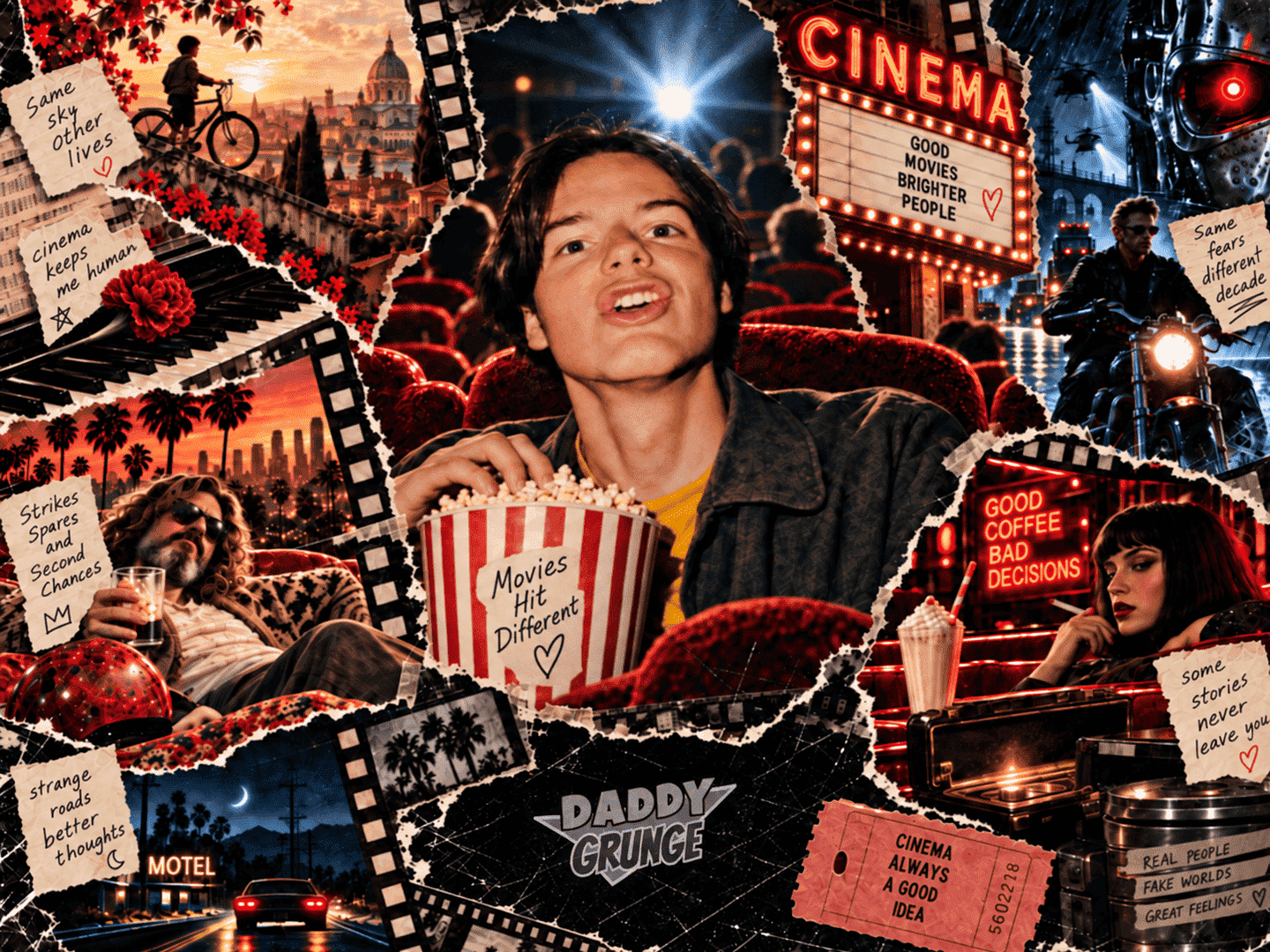
Five movies I’ll probably try to talk my daughters into watching someday.
Any list of great, interesting and memorable movies from the ’90s could go on forever. Classics like Forrest Gump, Good Will Hunting, Dances with Wolves or Home Alone immediately come to mind.
There’ll be blockbuster classics here, but also quieter indie movies. The ’90s were my decade of exploration in pretty much every sense, and going to the movies was still a proper cultural and entertainment event.
Speaking of cinema: yes, back then going to the movies actually felt like a little occasion. With friends, or sometimes even on your own. And because it was a social thing, the movie was usually dissected over a beer afterwards before everybody headed home.
What else were you supposed to do as a teenager in the Ore Mountains?
Clubkino Siegmar, the open-air cinemas at Vox or AJZ, or the Luxor Cinestar — those were the kinds of places a village kid like me ended up going to. Just adding a little local flavour here.
The Game
Rather than coming up with yet another debatable, taste-driven and ultimately pointless ranking, I asked myself a few different questions:
Which movies still echo in my head today? I’ve watched some of them a few more times over the years, but the strongest memory is usually still that very first viewing. And if a movie has stayed lodged in my brain all this time, it automatically has a decent shot at making the list.
Why did they stick? This is about scenes, moments and whatever those films meant to me personally.
How did I find them in the first place? Media hype? Recommendation? My own discovery? Pure accident?
Would I eventually annoy my daughters into watching them? That’s actually the deciding question. Some things age badly. Others somehow remain timeless. Fight Club, for example, genuinely shocked me when I watched it again after 25 years — mostly because of how naive and almost staged its rebelliousness suddenly felt. Back then? I stood up in the cinema and applauded. The only one. Didn’t care. I was completely blown away.
Out of Sight
So those four questions produced the first five movies I want to put out there. Please forgive me if, say, Titanic isn’t among them. No question: it’s an absolute masterpiece, a cinematic battleship, overwhelming and emotionally flattening when it wants to be. But for all its status as genuine cultural heritage, it simply hasn’t echoed through my own life in quite the same way.
So here it is: a completely personal list to argue with, roll your eyes at, rediscover, dismiss, remember — whatever works.
First Strike
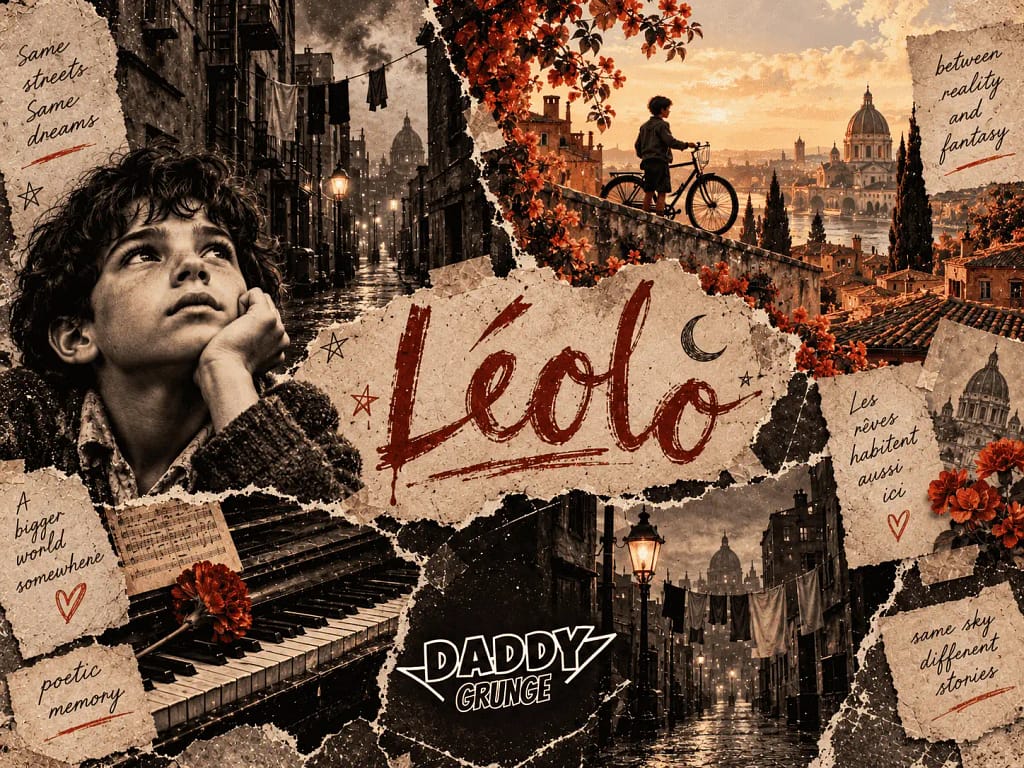
1. Léolo
The story of a boy going through puberty in a poor Canadian neighbourhood in the 1950s, while fantasising that he is actually Italian.
What is fiction? What is psychosis? What is a fragment of memory?
Hard to tell.
What you do get is a film full of bizarre, rough and sometimes pretty outrageous scenes.
“Because I dream,I am not.”
After-effect: When I think about this movie, I think of cinematic poetry. This really is lyricism captured on celluloid. A genuinely unusual piece of art.
How I found it: A recommendation from a good friend who had a huge influence on my cultural education. That alone makes it special to me.
Dad recommendation: Yes — but only once puberty is already well underway. Definitely not one for six-year-olds, and mentally it isn’t exactly light entertainment either.
A bit of trivia: Writer and director Jean-Claude Lauzon died in a plane crash in 1997. The film draws strongly on Réjean Ducharme’s novel L’Avalée des avalés, which also plays a role within the story itself. Experiences and emotions from Lauzon’s own life found their way into the film as well.
Highly metaphorical, wildly creative and packed with layers of meaning.
That’s why, to me, Léolo is basically “poetry in motion (picture)” — cinematic poetry.
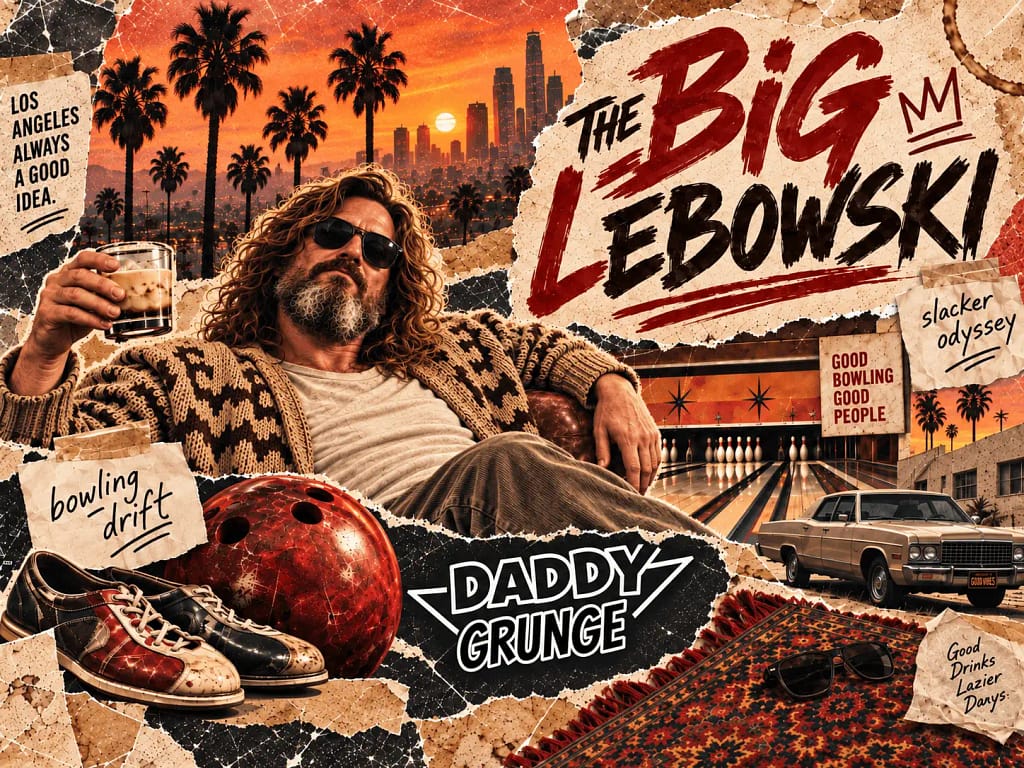
2. The Big Lebowski
An ageing hippie gets dragged, through a series of stupid coincidences, into something halfway between a gangster story and a bizarre odyssey through the L.A. art scene.
“That rug really tied the room together”
After-effect: Even though I’ve seen the film several more times since, a few things are permanently burned into my brain: “I hate the fucking Eagles,” Donny’s ashes ending up all over the Dude, and the Dude’s entire stoic couldn’t-give-a-shitapproach to life.
And, of course, watching Americans gleefully take the piss out of Germans.
How I found it:A standard cinema trip with a mate. I don’t think either of us really knew what we were walking into — other than the Coen brothers being a pretty reliable sign that it might be good.
It was basically: “Fancy going to the movies?”
We laughed our asses off. That I remember.
Whether the night ended in a pub afterwards? No idea.
Dad recommendation: Definitely. It’s a cult movie.
Whether my daughters will ever understand why the hell any of this is funny? Who knows.
Maybe the charm and flow really are timeless.
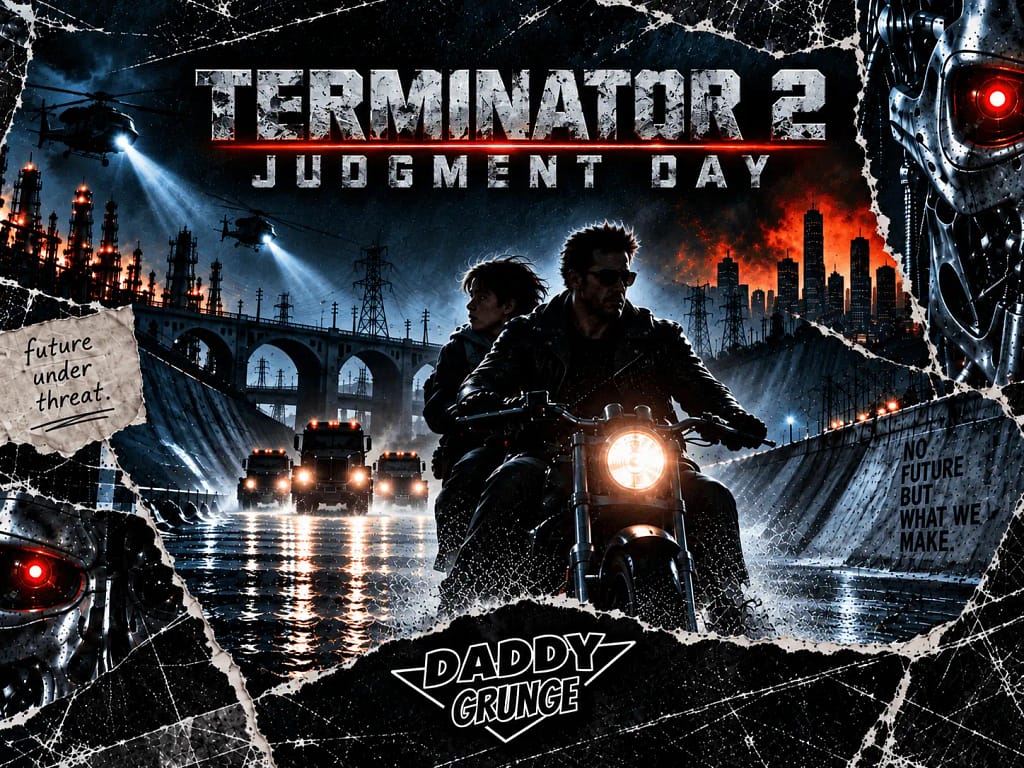
3. Terminator 2: Judgment Day
This time, the T-800 is John Connor’s protector, fighting an overwhelmingly superior enemy: the T-1000, a newer and much more dangerous model.
An action-packed thriller full of “speshul ee-fex.”
“I need your clothes, your boots, and your motorcycle.”
After-effect: Strangely enough, I don’t think I’ve ever sat down and watched the whole thing from start to finish again.
But every time a random scene appeared on TV, I’d immediately stop and soak it up.
How I found it: Media hype, late 1991.
Everybody wanted to see it.
So we went.
In packs.
On mopeds.
I remember the cinema in the neighbouring town being absolutely rammed. Half my class was sitting in there, and clouds of cigarette smoke hung in the room, cutting through the projector beam.
That’s how cinema is supposed to feel.
Great moment. Great movie.
Dad recommendation: Yes. I’d genuinely love to see how my daughters react to it.
Unless, of course, some real-life Skynet has completely ruined the dystopian charm by then and turned half the movie into a documentary.
Then they’ll probably look at me and ask:
You guys saw all this coming and did nothing?
Maybe showing them this one isn’t such a good idea after all.
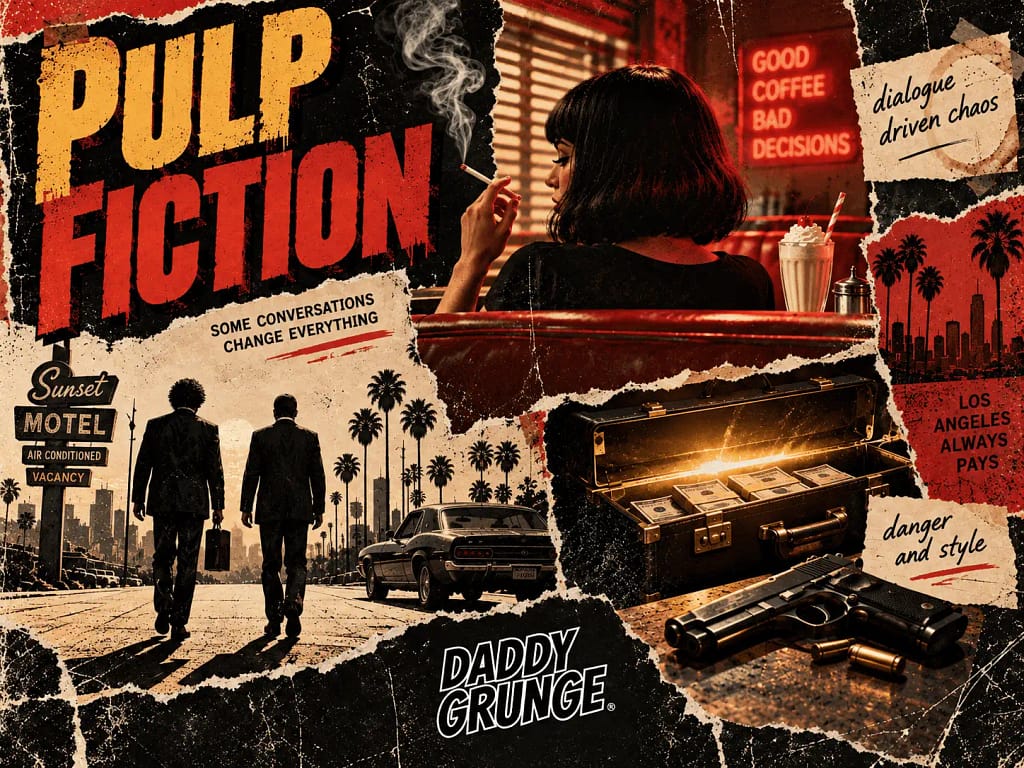
4. Pulp Fiction
A gangster tale told through interlocking storylines, built around dialogue, music, violence and one hell of a lot of style.
A Tarantino masterpiece.
“Say what again. Say what again, I dare you, I double dare you motherfucker, say what one more goddamn time!”
After-effect: More than anything, it’s the soundtrack, the coolness and that completely unique atmosphere that stayed with me.
It’s one of those movies I can still switch on today and immediately fall back into.
How I found it: I definitely noticed all the hype at the time — but I didn’t actually watch the movie until quite a bit later, probably around 1997.
So there’s no legendary cinema story attached to this one. No special night. Nothing dramatic.
I simply caught up with it eventually.
And immediately understood what everybody had been talking about.
Dad recommendation: Yes.
If only because it’s such an important piece of ’90s film and pop culture.
Whether my daughters will ever find it as cool as I do is another question entirely.
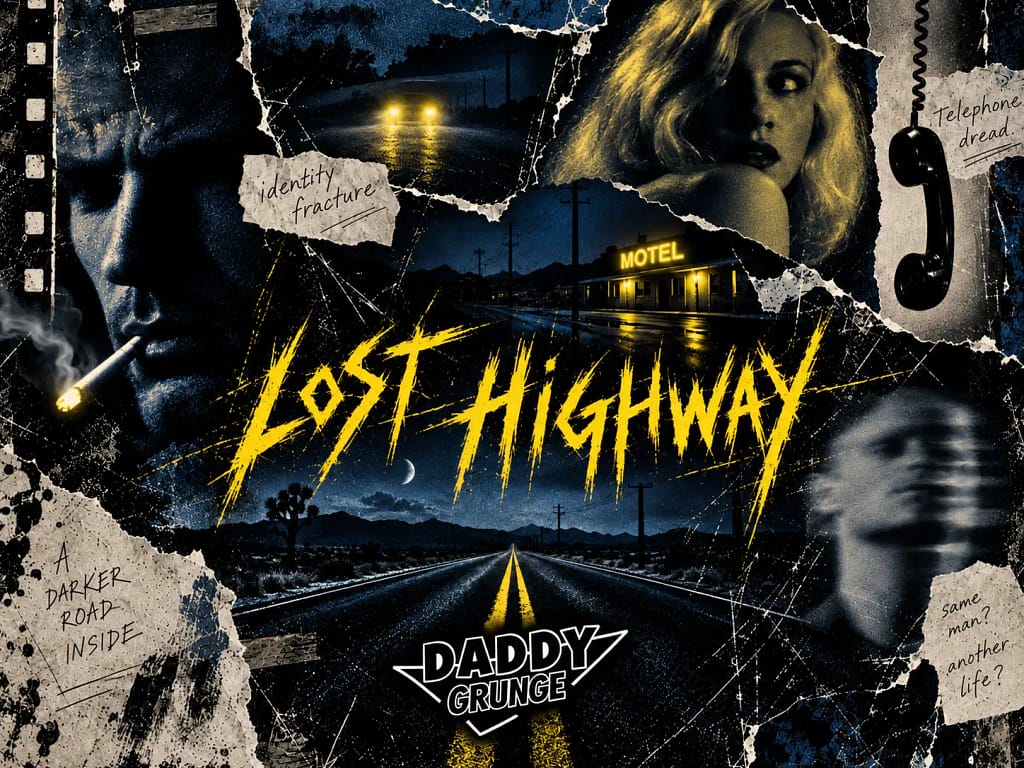
5. Lost Highway
So… what’s it about?
Not the easiest question to answer.
You basically have to surrender yourself to Lynch’s sequence of metaphors, changing identities, thriller moments and sudden shocks.
“I like to remember things my own way.”
After-effect: “I’m at your house. Call me.”
That still sends a shiver down my spine.
And this one I definitely remember discussing in a pub afterwards. My friend kept imitating the scene until it finally dragged me back out of whatever disturbed state the movie had left me in.
How I found it: Drove to the Luxor with a bunch of friends and simply picked it from the programme.
There were usually a few indie films hiding among all the blockbusters, so you could more or less just show up and take your chances.
We came out mildly traumatised.
Dad recommendation: Maybe this one is more along the lines of:
“Look at the kind of insane shit your dad used to watch.”
Mostly just to impress them a little.
A bit of trivia: Lost Highway became an important door-opener for Rammstein in the US. After Andy’s rather unpleasant encounter with a glass table, “Heirate mich” kicks in.
And that’s exactly how I remember it:
That riff hit the scene like a fucking sledgehammer.
Don’t want to miss more 90s Echoes? Grab the Backstage Pass!
From Marvin Gaye to the Muppets, from Madonna to Massive Attack
Funny what a random thought can dredge up.
This morning, doing the school run after a pointless phone call from my boss, Stiltskin’s “Inside” walked straight into my head — that brutal, unmistakable guitar riff and Ray Wilson’s raw, majestic voice. Don’t keeeep it — inside.
Later, sitting on the toilet, I ended up reading a piece about how the song and the band came about. How that whole strange constellation came together in the first place. Levi’s needed a song for an advert. The song landed so hard that a band had to be thrown together in a hurry, only for that band to fall apart just as brutally as the final twang of the hammer-riff in “Inside”.
And still, those Levi’s hypes left an astonishing glitter trail running from Shaggy and Fatboy Slim all the way to Flat Eric. Zoom in a little further and you find Nick Kamen, Massive Attack, Madonna, Genesis, the Smashing Pumpkins and even the Muppets woven into the same saga.
What’s Up?
But let’s take it from the top.
The story starts with a London agency called BBH — Bartle Bogle Hegarty — and one of its co-owners, a certain Sir John Hegarty: the man who rediscovered Audi’s “Vorsprung durch Technik” and put it back to work. His credo was simple:
Advertising doesn’t have to be loud or overloaded. It has to be clear, and culturally memorable.
By then Hegarty had been round the block — creative director, shareholder at Saatchi & Saatchi, founder of TBWA’s London office. In 1982 he opened a new chapter as co-owner of BBH, and clients like Audi and Levi’s were won over fast.
And so, in 1985, riding the 50s revival that was hip at the time, came the first TV spot for the 501 — a pair of jeans that by then counted as thoroughly unfashionable. That spot played Sir John’s credo to the hilt. A model called Nick Kamen — yes, that Nick Kamen, “I Promised Myself” — walks into a small-town 50s launderette, strips off with maximum cool, and sits there in his boxers among a roomful of stunned customers. Over the top of it hammers a replica recording of Marvin Gaye’s “I Heard It Through the Grapevine”.
You couldn’t get more culturally on-message than that.
Vogue
The ad was such a hit that the rights holders behind the original music, faced with an unexpected shower of money, rushed out reissues. And suddenly, everybody wanted a piece of Nick Kamen.
He happened to be a musician too, so the offers didn’t take long. Madonna badly wanted to produce an album with him, but time got in the way. She ended up handing him one of her songs instead. “Each Time You Break My Heart” became Kamen’s first international hit. His 1990 banger “I Promised Myself” went to number one in Sweden and Austria, number five in Germany — and barely made a dent in the UK.
Something Changed
Meanwhile, the Levi’s formula — male model + soul classic — kept running hot until, by 1994, the whole thing had been squeezed dry. New ideas were needed.
Enter Peter Lawlor, a well-connected young producer with a head for business and a brief detour through the New York trading world behind him. Handed the job of coming up with a song for the new Levi’s spot, he clocked pretty quickly that even acts like Massive Attack were in the running. Everybody was feeling their way forward. The brief kept changing.
What gradually became clear was that they wanted some kind of anthem, so Lawlor wrote a sustained choral piece.
Then it emerged that this choral section was supposed to be broken open by something more emotional — but none of the compositions convinced anybody. BBH came back to Lawlor. At least his opening had made the cut.
Right Here, Right Now
Lawlor remembered a song that had been sitting in his drawer for the best part of a decade. He produced the whole thing over one weekend, playing every instrument himself — then dropped it again in favour of a more electronic, supposedly hipper version. Remember: Massive Attack and other painfully cool people were in the running.
That one got a polite thumbs-down. So Lawlor played his last ace: the rock song. And it caught fire. So hard, in fact, that demand for the song from the advert exploded. There was just one small problem. A band was needed.
Fake Plastic Trees
Lawlor placed an ad, and a struggling young singer called Ray Wilson climbed into his clapped-out VW and drove down to London to audition.
The single got shoved out fast, and I genuinely still remember the ad for it — along with the near-brawl on stage between Ray Wilson and Peter Lawlor. Lawlor kicked Wilson in the face and sent the mic flying out of his hand. MTV loved it and ran the clip on a loop as a trailer.
Clearly, the band members weren’t exactly soulmates.
After the first album, it was over. Wilson — genuinely a fantastic voice — went on to a spell with Genesis that lasted until the end of the 90s.
Billy Corgan, meanwhile, repeatedly felt the need to introduce his own band, the Smashing Pumpkins, as Stiltskin. He was convinced Lawlor had nicked that deep guitar sound off him. Supposedly, his “Today” had even been approached for the Levi’s ad. But that one belongs in the legends department.
Wow — skip to around 3:45 and it’s one kick away from a full-on stage brawl. So much for band chemistry. Even though they seem to be making up again in the end.
Spaceman
Through all of this, the machine kept rolling. A certain Norman Cook — later better known as Fatboy Slim — supplied the song and bassline as a member of Freak Power for that controversial drag-queen-in-a-New-York-taxi spot.
Then came a claymation ad powered by Shaggy’s “Boombastic”, which detonated in glorious dancehall fashion.
And then a big-beat alien girl knocked the world off its hinges one more time. Remixed by Arthur Baker, the song and bassline came crashing in with such juicy big beats and such promise that everybody expected some kind of better Prodigy track.
Plenty has been written about the disappointment when Jas Mann’s original turned out to be something else entirely: grungy, dark, brooding, melancholy and socially critical. Funny thing is, just as with Stiltskin, I’d actually bought the CD single — and I got on perfectly well with the very different song underneath all that hype.
Anyway. Another strange furore kicked off by a popular pair of blue jeans.
Roll With It
Next came Smoke City’s “Underwater Love”, a remarkable trip-hop-meets-bossa-nova chanson and another perfectly fitting sound capsule that stamped itself onto the decade.
Worth pointing out: these songs weren’t custom-built like “Inside”. They were already out there. Levi’s simply gave them an enormous boost.
The last big track in this whole zeitgeist-splattering parade was Mr Oizo’s “Flat Beat”, after the Lilys had been allowed to scrub away at their indie guitars with “A Nanny in Manhattan”. Both spots came from directors who’d go on to bigger things: Michel Gondry shot the Smoke City one, Roman Coppola the Lilys. B
A cheerfully bobbing yellow puppet called Flat Eric — built by the people behind the Muppets, no less — and a crunchy slab of techno couldn’t stir up much more drama. Apart from everyone aping that stupid little bobbing motion.
The one telling detail was that the track got pushed through almost against the client’s wishes — a small sign that the shared instinct for the pulse of the moment was beginning to fade on all sides. The formula had hit its end point.
The End Is the Beginning Is the End
Levi’s was already on the way down by the time the Strokes helped bring skinny jeans back — with mass layoffs and factory closures along the way. And even that brief skinny-jeans revival of the early 2000s never restored the strong market position the brand had enjoyed in the 90s.
BBH won the American business again in 2002, but in 2010 it was the agency itself that chose not to continue. Apparently, there was simply nothing left to say. The culture machine had come apart.
What’s left is a wave of hype that made stars and let them fall, dozens of astonishing stories, and half a decade of pop culture that, in its wild mix of rock’n’roll, commerce and appetite for invention, could only have come out of the 90s. Less calculation, more instinct.
And I’d genuinely love to know: 90s folks — do any of you still wear Levi’s? If you do: chapeau, Sir John. Praise be to clever marketing. Oh, and — since this is where the whole toilet research started: does anybody actually know what “Inside” is about?
So here we are now — stuck between the day-job grind, the responsibilities of fatherhood, and the ambitions that never quite faded. In my case, those ambitions were always built on music.
Growing older shouldn’t feel like being buried alive, yet here it is: a mountain of routines, bills, and a culture engineered for distraction, hyper-capitalism, and permanent noise.
That is likely why the 90s still glow. Were they really better? Of course not. We lacked the tools that define our lives today. But somewhere in the technological leap, something human — a specific glimpse of hope — got lost.
Bitter Sweet Symphony
Is this just a GenX perception? On paper, the world is better off now: crime has gone down, and poverty and hunger have decreased. A lot was happening back then: The Wall had fallen. The Eastern bloc crumbled, the Cold War was over. Apartheid ended, Europe looked like it might finally come together and the world seemed to agree that they could tackle a major global challenge—climate change—together. The web opened new horizons. Science moved fast. Culture exploded – even the Beatles sort of “reunited”. Amazement was here, there, everywhere. “Globalization” was key. The world seemed to be on a Love Parade.
But the decade carried its own brutality. The Gulf War. The Balkans. Rwanda. Mid-way through, the light dimmed: the assassination of Yitzhak Rabin dealt a blow to the peace process in the Middle East. Mass shootings and market crashes proved that instability was always lurking. And we know now that while feminism finally reached the public eye, the exploitation of women remained rampant.
Kurt Cobain’s suicide silenced the voice of a generation. Princess Diana’s death shook the world.
Still, why does the spirit of the 90s feel so unattainable now?
Smells Like Teen Spirit
The magic was the rawness. Styles were still forming. Scenes had edges. You could inhabit grunge and dance culture, alienation and hedonism, depth and nonsense — often all at once. Life was an exploration: spontaneous parties, concert trips, and long talks deep into the night. We followed impulses, not algorithms. We gathered in loose, chaotic crowds. Even the internet was a playground for stumbling across things, not a machine for performance and constant self-display.
There was more space to be unfinished. More curiosity. More joy. Things meant something.
Human Behaviour
This isn’t an “old guy” rant about everything going down the drain. It’s about recovery. It’s about reclaiming the drive to try things out before they are polished and made marketable.
What’s missing today isn’t the past; it’s the permission to be raw and the will to embrace the new without needing to own it. That creates a better understanding of each other — and more empathy for each other’s path.
Keep openness up. Embrace exploration. Right about now!
That’s Daddy Grunge.
Manage Consent
To provide the best experiences, we use technologies like cookies to store and/or access device information. Consenting to these technologies will allow us to process data such as browsing behavior or unique IDs on this site. Not consenting or withdrawing consent, may adversely affect certain features and functions.
Functional Always active
The technical storage or access is strictly necessary for the legitimate purpose of enabling the use of a specific service explicitly requested by the subscriber or user, or for the sole purpose of carrying out the transmission of a communication over an electronic communications network.
Preferences
The technical storage or access is necessary for the legitimate purpose of storing preferences that are not requested by the subscriber or user.
Statistics
The technical storage or access that is used exclusively for statistical purposes.The technical storage or access that is used exclusively for anonymous statistical purposes. Without a subpoena, voluntary compliance on the part of your Internet Service Provider, or additional records from a third party, information stored or retrieved for this purpose alone cannot usually be used to identify you.
Marketing
The technical storage or access is required to create user profiles to send advertising, or to track the user on a website or across several websites for similar marketing purposes.