
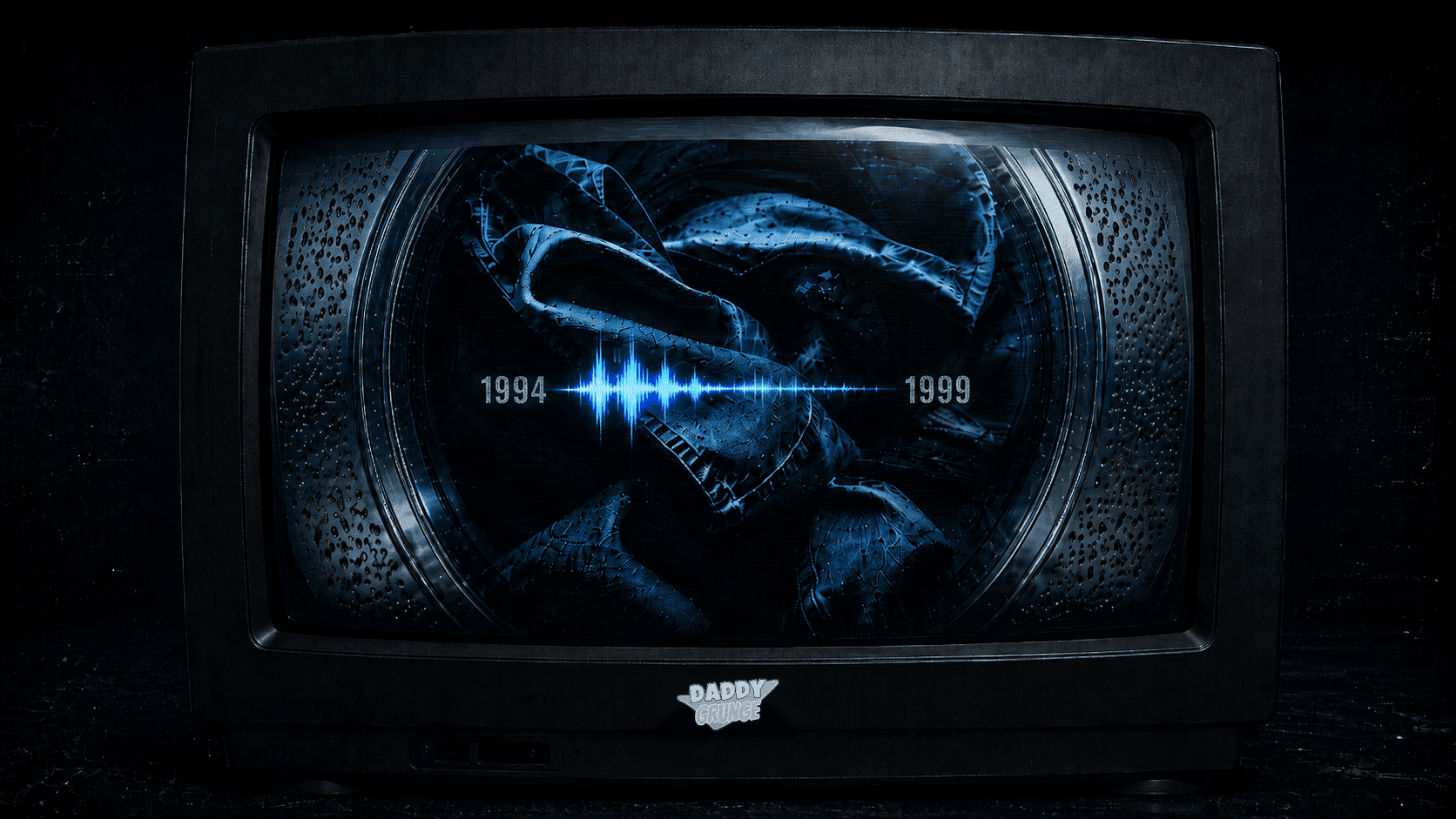
From Marvin Gaye to the Muppets, from Madonna to Massive Attack
Funny what a random thought can dredge up.
This morning, doing the school run after a pointless phone call from my boss, Stiltskin’s “Inside” walked straight into my head — that brutal, unmistakable guitar riff and Ray Wilson’s raw, majestic voice. Don’t keeeep it — inside.
Later, sitting on the toilet, I ended up reading a piece about how the song and the band came about. How that whole strange constellation came together in the first place. Levi’s needed a song for an advert. The song landed so hard that a band had to be thrown together in a hurry, only for that band to fall apart just as brutally as the final twang of the hammer-riff in “Inside”.
And still, those Levi’s hypes left an astonishing glitter trail running from Shaggy and Fatboy Slim all the way to Flat Eric. Zoom in a little further and you find Nick Kamen, Massive Attack, Madonna, Genesis, the Smashing Pumpkins and even the Muppets woven into the same saga.
What’s Up?
But let’s take it from the top.
The story starts with a London agency called BBH — Bartle Bogle Hegarty — and one of its co-owners, a certain Sir John Hegarty: the man who rediscovered Audi’s “Vorsprung durch Technik” and put it back to work.
His credo was simple:Advertising doesn’t have to be loud or overloaded. It has to be clear, and culturally memorable.
By then Hegarty had been round the block — creative director, shareholder at Saatchi & Saatchi, founder of TBWA’s London office. In 1982 he opened a new chapter as co-owner of BBH, and clients like Audi and Levi’s were won over fast.
And so, in 1985, riding the 50s revival that was hip at the time, came the first TV spot for the 501 — a pair of jeans that by then counted as thoroughly unfashionable.
That spot played Sir John’s credo to the hilt. A model called Nick Kamen — yes, that Nick Kamen, “I Promised Myself” — walks into a small-town 50s launderette, strips off with maximum cool, and sits there in his boxers among a roomful of stunned customers. Over the top of it hammers a replica recording of Marvin Gaye’s “I Heard It Through the Grapevine”.
You couldn’t get more culturally on-message than that.
Vogue
The ad was such a hit that the rights holders behind the original music, faced with an unexpected shower of money, rushed out reissues. And suddenly, everybody wanted a piece of Nick Kamen.
He happened to be a musician too, so the offers didn’t take long. Madonna badly wanted to produce an album with him, but time got in the way. She ended up handing him one of her songs instead.
“Each Time You Break My Heart” became Kamen’s first international hit. His 1990 banger “I Promised Myself” went to number one in Sweden and Austria, number five in Germany — and barely made a dent in the UK.
Something Changed
Meanwhile, the Levi’s formula — male model + soul classic — kept running hot until, by 1994, the whole thing had been squeezed dry.
New ideas were needed.
Enter Peter Lawlor, a well-connected young producer with a head for business and a brief detour through the New York trading world behind him.
Handed the job of coming up with a song for the new Levi’s spot, he clocked pretty quickly that even acts like Massive Attack were in the running. Everybody was feeling their way forward. The brief kept changing.
What gradually became clear was that they wanted some kind of anthem, so Lawlor wrote a sustained choral piece.
Then it emerged that this choral section was supposed to be broken open by something more emotional — but none of the compositions convinced anybody. BBH came back to Lawlor. At least his opening had made the cut.
Right Here, Right Now
Lawlor remembered a song that had been sitting in his drawer for the best part of a decade. He produced the whole thing over one weekend, playing every instrument himself — then dropped it again in favour of a more electronic, supposedly hipper version. Remember: Massive Attack and other painfully cool people were in the running.
That one got a polite thumbs-down. So Lawlor played his last ace: the rock song. And it caught fire. So hard, in fact, that demand for the song from the advert exploded. There was just one small problem. A band was needed.
Fake Plastic Trees
Lawlor placed an ad, and a struggling young singer called Ray Wilson climbed into his clapped-out VW and drove down to London to audition.
The single got shoved out fast, and I genuinely still remember the ad for it — along with the near-brawl on stage between Ray Wilson and Peter Lawlor. Lawlor kicked Wilson in the face and sent the mic flying out of his hand. MTV loved it and ran the clip on a loop as a trailer.
Clearly, the band members weren’t exactly soulmates.
After the first album, it was over. Wilson — genuinely a fantastic voice — went on to a spell with Genesis that lasted until the end of the 90s.
Billy Corgan, meanwhile, repeatedly felt the need to introduce his own band, the Smashing Pumpkins, as Stiltskin. He was convinced Lawlor had nicked that deep guitar sound off him. Supposedly, his “Today” had even been approached for the Levi’s ad. But that one belongs in the legends department.
Wow — skip to around 3:45 and it’s one kick away from a full-on stage brawl. So much for band chemistry. Even though they seem to be making up again in the end.
Spaceman
Through all of this, the machine kept rolling. A certain Norman Cook — later better known as Fatboy Slim — supplied the song and bassline as a member of Freak Power for that controversial drag-queen-in-a-New-York-taxi spot.
Then came a claymation ad powered by Shaggy’s “Boombastic”, which detonated in glorious dancehall fashion.
And then a big-beat alien girl knocked the world off its hinges one more time. Remixed by Arthur Baker, the song and bassline came crashing in with such juicy big beats and such promise that everybody expected some kind of better Prodigy track.
Plenty has been written about the disappointment when Jas Mann’s original turned out to be something else entirely: grungy, dark, brooding, melancholy and socially critical.
Funny thing is, just as with Stiltskin, I’d actually bought the CD single — and I got on perfectly well with the very different song underneath all that hype.
Anyway. Another strange furore kicked off by a popular pair of blue jeans.
Roll With It
Next came Smoke City’s “Underwater Love”, a remarkable trip-hop-meets-bossa-nova chanson and another perfectly fitting sound capsule that stamped itself onto the decade.
Worth pointing out: these songs weren’t custom-built like “Inside”. They were already out there. Levi’s simply gave them an enormous boost.
The last big track in this whole zeitgeist-splattering parade was Mr Oizo’s “Flat Beat”, after the Lilys had been allowed to scrub away at their indie guitars with “A Nanny in Manhattan”. Both spots came from directors who’d go on to bigger things: Michel Gondry shot the Smoke City one, Roman Coppola the Lilys. B
A cheerfully bobbing yellow puppet called Flat Eric — built by the people behind the Muppets, no less — and a crunchy slab of techno couldn’t stir up much more drama. Apart from everyone aping that stupid little bobbing motion.
The one telling detail was that the track got pushed through almost against the client’s wishes — a small sign that the shared instinct for the pulse of the moment was beginning to fade on all sides. The formula had hit its end point.
The End Is the Beginning Is the End
Levi’s was already on the way down by the time the Strokes helped bring skinny jeans back — with mass layoffs and factory closures along the way.
And even that brief skinny-jeans revival of the early 2000s never restored the strong market position the brand had enjoyed in the 90s.
BBH won the American business again in 2002, but in 2010 it was the agency itself that chose not to continue. Apparently, there was simply nothing left to say. The culture machine had come apart.
What’s left is a wave of hype that made stars and let them fall, dozens of astonishing stories, and half a decade of pop culture that, in its wild mix of rock’n’roll, commerce and appetite for invention, could only have come out of the 90s. Less calculation, more instinct.
And I’d genuinely love to know: 90s folks — do any of you still wear Levi’s? If you do: chapeau, Sir John. Praise be to clever marketing. Oh, and — since this is where the whole toilet research started: does anybody actually know what “Inside” is about?

Leave a Reply